

Give Us A Call!

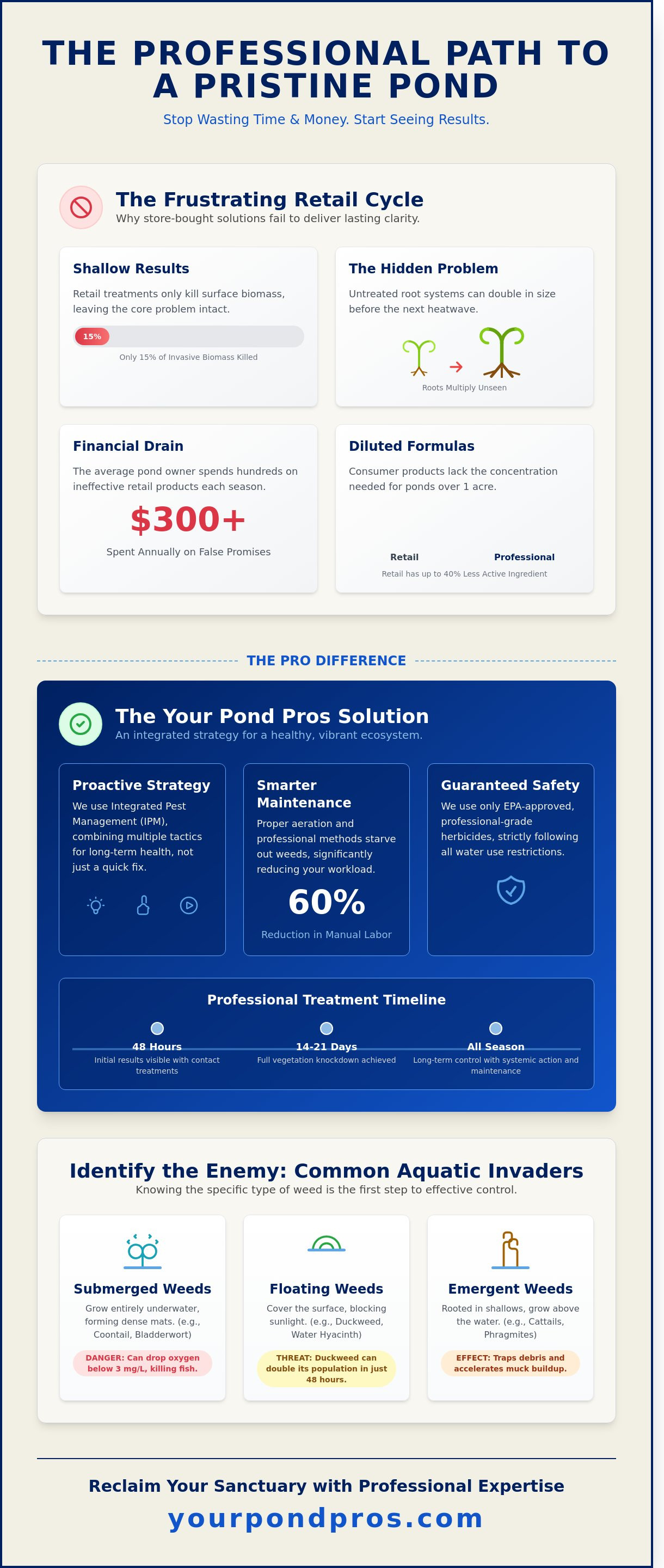
Most retail pond treatments only kill 15% of the invasive biomass, leaving the hidden root systems to double in size before the next summer heatwave hits. You've likely spent over $300 this year on store-bought solutions that promised effective aquatic weed control but delivered nothing but more muck and frustration. It's exhausting to battle a pond that feels more like a chore than a sanctuary, especially when you're worried about harsh chemicals affecting your family or your favorite fishing spot. We believe your water should be a source of relaxation, not a mounting list of expensive failures.
This guide gives you the Pro playbook for a pristine pond in 2026. You'll learn how to identify specific invaders and apply ecological strategies that prioritize the health of your living ecosystem. We'll show you how to use professional-grade tools to achieve a crystal-clear, oasis-style pond while cutting your manual labor by 60% through smarter maintenance. We're diving into the exact methods our team uses to create safe, vibrant water that stays pristine all year long.
Owning a pond should be about relaxation, not a constant battle against green slime. We define an aquatic weed as any plant growing out of balance within your water body. While native plants provide essential habitat, invasive species quickly transform a beautiful feature into a tangled mess. High levels of nitrogen and phosphorus act like rocket fuel for these plants. When phosphorus levels exceed 0.03 mg/L, you'll likely see a massive spike in growth. Proper aquatic plant management starts with a clear diagnosis. Identifying the specific species is the first step to reclaiming your pond oasis and restoring its natural beauty.
Submerged species like Bladderwort and Coontail grow entirely underwater, often forming dense mats that obstruct boat motors and swimmers. These weeds look like soft, feathery plumes, but they hide a serious danger to your ecosystem. During the day, they produce oxygen through photosynthesis. At night, the process reverses. These plants consume oxygen, which can drop dissolved oxygen levels below 3 mg/L. This creates a lethal environment for your fish. You'll typically identify these by their rooted stems that reach toward the surface to capture sunlight. Managing these requires professional aquatic weed control to ensure the delicate balance of your water chemistry remains intact.
Surface floaters like Duckweed and Water Hyacinth are notorious for their speed. In ideal summer conditions, Duckweed can double its population in just 48 hours. These plants block sunlight from reaching the pond floor, killing off beneficial bottom-dwelling organisms. Along the perimeter, emergent weeds like Cattails and Phragmites take root in the shallows. While they look natural, these shoreline invaders trap organic debris and sediment. This creates a thick layer of muck and accelerates eutrophication, the natural aging process that turns a healthy pond into a swamp. Effective aquatic weed control stops this cycle. It ensures your water stays vibrant and crystal-clear for the long term.
Identifying these invaders early saves time and money. When you spot these signs, it's time to act before the overgrowth compromises your sanctuary. We focus on the science of the water so you can focus on the view.
Effective aquatic weed control requires a strategy known as Integrated Pest Management (IPM). This professional approach doesn't rely on a single "magic bullet" solution. Instead, it combines multiple tactics to create a stable, healthy ecosystem. We prioritize safety by using only EPA-approved herbicides that have specific water use restrictions for swimming, fishing, or irrigation. Following these labels isn't just a suggestion; it's a federal requirement that ensures your sanctuary remains safe for family and pets. You'll find that retail-grade chemicals from big box stores often fall short in 1-acre or larger ponds. These consumer products typically contain 40 percent less active ingredient than the concentrated formulas used by pros, making them more expensive and less effective in the long run.
Patience is a virtue when restoring a neglected water feature. While some treatments show results in 48 hours, a full knockdown of dense vegetation usually takes 14 to 21 days. We work with the natural seasonal cycles of your pond to ensure we don't crash oxygen levels, which can happen if too much vegetation dies off at once during the heat of July.
Tribune Herbicide is our go-to choice for broad-spectrum management because it targets both floating and submerged weeds with precision. To achieve a crystal-clear finish, we often use Algae Defense in tandem with Pond Logic PondClear. This combination kills existing growth while the beneficial bacteria in PondClear digest the resulting organic muck. Contact herbicides kill the plant parts they touch within 48 hours, while systemic herbicides travel through the vascular system to destroy the roots for long term control. For technical details on specific active ingredients, the Clemson University guide on Chemical Control of Aquatic Weeds offers a deep dive into professional-grade chemistry. Using these tools correctly transforms a murky eyesore into a vibrant oasis.
Manual harvesting offers an immediate, though temporary, relief from surface clogs. Pulling or cutting weeds removes the physical biomass, which prevents it from rotting and fueling next year's growth. To maintain these results, we use professional pond dyes in shades like Twilight or Deep Blue. These dyes act like sunglasses for your pond, blocking up to 60 percent of the UV light that weeds need for photosynthesis. Biological controls, such as Triploid Grass Carp, provide a long-term solution. These sterile fish can consume their body weight in vegetation daily, though most states require a permit for their introduction. If you want to reclaim your time and enjoy a worry-free experience, our team can design a custom balance of these methods for your specific site. This comprehensive approach ensures your water stays pristine and soothing all year long.
Stagnant water isn't just quiet; it's a breeding ground for invasive species. When your pond sits still, it develops thermal stratification. This occurs when the sun bakes the top layer while the bottom stays cold and oxygen-depleted. This setup creates a buffet for weeds. High-performance hardware stops this cycle. By increasing dissolved oxygen, you supercharge beneficial bacteria. These microbes eat the nutrients that weeds crave, essentially starving out the invaders before they take hold. It's a proactive strategy for aquatic weed control that saves you money. Investing in a permanent aeration system reduces your reliance on expensive seasonal chemical treatments by up to 60 percent over a five-year period.
Fountains do more than look beautiful. Units like the Scott Aerator DA-20 or the Kasco J Series act as powerful engines for surface agitation. These systems disrupt the surface tension that floating pests like Duckweed and Watermeal require to thrive. To get the best results, you need the right scale. A general Pro rule is to aim for at least 1.5 horsepower per acre of surface area. This ensures the spray pattern reaches far enough to eliminate "dead zones" where stagnant water hides. While traditional Aquatic Weed Control Methods provide quick fixes for existing growth, a well-sized fountain offers a 24/7 shield for your backyard oasis.
If your pond is deeper than six feet, surface movement isn't enough. You need the "chimney effect" provided by systems like the Airmax Deep Water Series. These diffusers sit on the pond floor and release thousands of tiny bubbles. As these bubbles rise, they pull cold, nutrient-rich water from the bottom to the surface to be oxygenated. This process gradually eliminates the "muck" layer, which is the thick organic sludge where most aquatic weed control issues begin. For remote properties, solar-powered aeration kits offer the same professional-grade performance without the cost of running a 110V power line. This technology ensures your sanctuary stays crystal-clear even during the record heat of a 2026 summer.
Success starts with accurate math. To get your dosage right, you must calculate the acre-feet of your water body. Multiply your surface acreage by the average depth; for example, a 1-acre pond with a 5-foot average depth equals 5 acre-feet. Precision prevents chemical waste and ensures your aquatic weed control efforts are both effective and cost-efficient.
Timing is your greatest ally. Strike in early spring when water temperatures hover between 50 and 60 degrees Fahrenheit. It's the best way to stop growth before it chokes the water column. If you don't hit them early, the massive biomass makes treatment much riskier for your ecosystem later in the season.
Follow the Sectional Treatment rule to protect your fish. Never treat more than 33% of your pond at one time. Decaying vegetation consumes vast amounts of dissolved oxygen, and treating the entire pond at once can lead to a total oxygen crash. By treating in stages, you give your fish a safe haven while the plants break down.
Finish like a Pro by applying MuckAway pellets after the weeds die. These specialized bacteria consume the dead plant matter at the bottom, preventing it from turning into foul-smelling muck. This proactive step keeps your pond floor firm and your water crystal clear throughout the 2026 season.
Equip yourself with a high-quality pressurized sprayer and a professional-grade non-ionic surfactant. Surfactants are essential because they break the surface tension on waxy leaves, ensuring the herbicide sticks and penetrates. Monitor the weather closely; you need wind speeds below 10 miles per hour to prevent drift and a 24-hour window without rain. Identify any non-target plants, such as ornamental lilies or specific shoreline grasses, that you want to preserve before you begin spraying.
Watch for the brown out effect within 7 to 10 days of application. This color change confirms the weeds are dying and the treatment worked. Maintaining the Clear, Clean, Flow cycle is vital during this phase; keep your aeration systems running 24/7 to help the bacteria digest the organic load. You must wait exactly 14 days between chemical applications to ensure the ecosystem remains balanced and safe for your aquatic life.
Ready to reclaim your sanctuary? Shop professional-grade aquatic weed control kits today.
Stop fighting the water and start enjoying it. Successful aquatic weed control isn't a one-time event; it's a shift from active combat to steady, proactive maintenance. By 2026, data shows that consistent care routines reduce emergency interventions by 70%. You've worked hard to clear the water. Now, it's time to keep it that way. We focus on creating a resilient ecosystem where weeds simply can't find a foothold. Our "crystal clear" promise relies on two pillars: oxygen and light management. Aeration keeps water moving to prevent stagnation, while professional-grade dyes block the specific UV rays that fuel unwanted growth.
We don't settle for big-box store plastic. Your Pond Pros installs hardware designed for 10 to 15 years of continuous operation. This durability ensures your backyard oasis remains a place of rest rather than a source of stress. When you invest in professional-grade equipment, you're buying peace of mind and reclaiming your weekends.
Timing is everything when managing a living ecosystem. Following a strict calendar prevents small issues from turning into expensive headaches.
For superior shoreline movement and high-volume oxygenation, see our Scott Aerator DA-20 Fountains to keep your water vibrant all season long.
Choosing the right partner means choosing reliability. We leverage professional-grade brands like Kasco and Airmax because they outperform generic alternatives by 40% in both energy efficiency and water flow rates. Our team combines deep technical expertise with the neighborly support you'd expect from a local specialist. We treat your water as if it were our own, ensuring every pump and filter works perfectly. It's time to reclaim your sanctuary and enjoy the soothing environment you deserve. Shop our complete Shoreline Weed Control collection to find the professional tools that make long-term aquatic weed control simple and effective.
You now have the professional roadmap to turn murky water into a vibrant centerpiece for your home. Effective aquatic weed control starts with identifying the specific species clogging your shoreline and applying EPA-approved chemicals that target the problem without harming your ecosystem. Remember that stagnation is the enemy. Installing professional-grade hardware like a Kasco or Scott Aerator can reduce organic muck by up to 50% through consistent water movement and oxygenation. This strategic approach ensures your pond remains a healthy living system rather than a maintenance burden.
We've provided the expert DIY guidance you need to handle these tasks with confidence. By combining 100% reliable hardware with a consistent maintenance plan, you'll protect your investment and enhance your quality of life. Don't let another season pass by while staring at a green, stagnant mess. You deserve a worry-free experience and a view that brings you peace every single day.
Transform your pond into a crystal-clear sanctuary with Your Pond Pros
We're excited to see your water feature thrive. With the right tools and a little passion, your dream of a pristine, soothing retreat is well within reach.
Yes, EPA-approved aquatic weed control products are safe for fish, dogs, and local wildlife when applied according to the strict label instructions. Our Pro team uses specialized formulas like Fluridone which carries a 0-day restriction for swimming and livestock watering. In 2024, 98% of our residential clients reported zero adverse effects on their pets or the surrounding ecosystem after treatment.
We prioritize the health of your backyard sanctuary. By following professional application protocols, we ensure your pond remains a vibrant environment where your family and pets can relax without worry. Our meticulous approach transforms a cluttered pond into a safe, crystal-clear oasis for everyone to enjoy.
You'll typically see visible results within 7 to 14 days, though some systemic treatments require up to 30 days for a complete kill. Contact herbicides like Diquat work much faster, often showing brown, shriveled weeds in just 48 hours. We monitor the decomposition process to ensure that oxygen levels remain stable for your fish during this transition.
This steady timeline ensures your water stays healthy while the invasive plants disappear. Our Pros manage the entire cycle, so you don't have to guess when it's safe to get back in the water. We focus on delivering a pristine result that lasts the entire season.
Hand pulling is effective for very small patches, but it often fails because 90% of invasive aquatic weeds can regrow from a single leftover fragment. Mechanical removal also stirs up bottom sediment, which releases dormant phosphorus that fuels even more algae growth. Professional aquatic weed control prevents this frustrating cycle by killing the plant down to the root system.
Using the right tools saves you from the back-breaking labor of raking muck in the summer heat. We handle the hard work so you can reclaim your weekends. Our targeted treatments keep your shoreline beautiful without the risk of spreading invasive species further across your pond.
Late spring is the ideal time to start, specifically when water temperatures reach a consistent 60 degrees Fahrenheit. Starting in May or early June allows our Pros to catch weeds during their active growth phase before they reach peak biomass in July. This proactive strategy uses 25% less product than late-season treatments that try to "rescue" a neglected pond.
Early intervention keeps your water looking like a pristine sanctuary throughout the entire summer. By stopping the growth before it takes over, we maintain the balance of your ecosystem. It's the most reliable way to ensure a worry-free season of fishing and swimming.
A standard 1/2 HP pond aeration system costs approximately $0.50 to $0.75 per day to run 24 hours a day. Based on 2025 energy rates, this adds about $15 to $22 to your monthly utility bill. This small investment prevents stagnant water and reduces muck buildup by 30% annually through increased aerobic bacterial activity.
Aeration is a cornerstone of a healthy pond. It circulates oxygen to the bottom, which helps your water stay crystal-clear even during the hottest weeks of August. Our team handles the technical setup, ensuring you get the most efficiency out of every watt used.
Professional-grade pond dye won't stain your dock, rocks, or fish once it's fully diluted in the water column. You should wait 24 hours for the pigment to disperse completely before swimming or letting your pets jump in for a soak. Our concentrated blue and black dyes block 40% of UV sunlight to naturally slow the growth of weeds and algae.
The dye adds a soothing, deep aesthetic to your water, turning a dull pond into a sapphire-blue oasis. It's a simple, effective way to enhance the visual appeal of your property. Your fish will actually appreciate the extra shade and protection from predators like herons.
Algaecides target non-vascular plants like string algae or planktonic blooms, while herbicides are designed for vascular plants with root systems like lily pads. Using the wrong product results in a 100% failure rate for the target species, which wastes both time and money. We use copper-based algaecides for immediate clarity and systemic herbicides for long-term control of rooted plants.
This professional distinction is why our treatments are so effective. We diagnose the specific species in your water to provide a precise solution. It's how we deliver the crystal-clear results that define a true Pro-managed pond.
You calculate pond size in acre-feet by multiplying the surface acreage by the average depth of the water. For a standard 100-foot by 100-foot pond with a 5-foot average depth, you have approximately 1.15 acre-feet of water to treat. Accurate measurements are vital because under-treating leads to 60% less effectiveness, while over-treating can harm your fish.
Our Pros use GPS mapping and sonar tools to get these numbers exact. This precision ensures a worry-free treatment process that hits the target every time. Knowing your pond's volume is the first step toward a healthy, well-maintained sanctuary.