


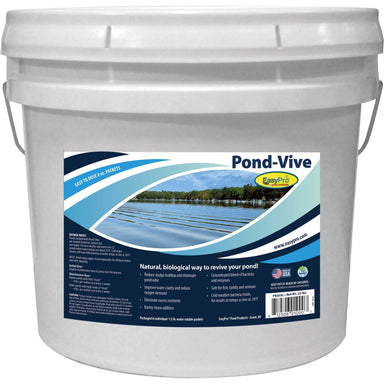
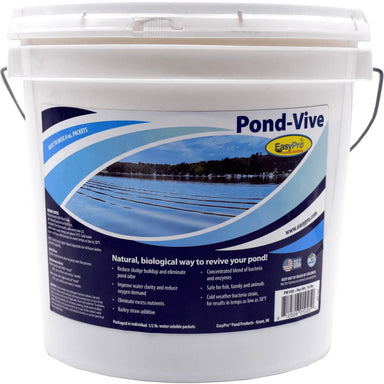
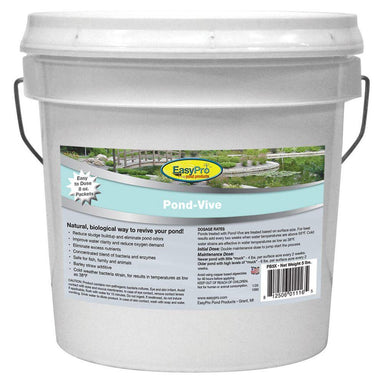
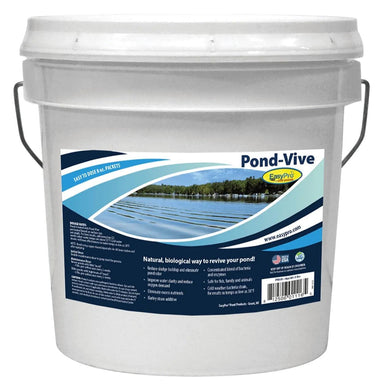
Beneficial Bacteria for Ponds
Beneficial bacteria is one of the safest, lowest-effort ways to clean up a pond and restore it to a healthy, balanced state — no chemicals, no risk to fish or plants, just naturally occurring bacteria doing what they already do, at a higher concentration than your pond would develop on its own.
How Pond Bacteria Actually Works
These bacteria break down the organic waste that builds up in every pond — fish waste, uneaten food, decaying leaves and plant matter, and bottom muck. Left alone, that waste feeds algae blooms and creates the sludge layer that gradually thickens on a pond floor over time. Adding a concentrated beneficial bacteria treatment accelerates that natural breakdown process, reducing muck buildup and the nutrients that fuel algae growth at the same time.
Liquid, Powder, or Water-Soluble Packs?
- Water-soluble packs are the most convenient for regular dosing — just drop a pack in, no measuring
- Bulk loose powder is the most economical option for larger ponds or ongoing seasonal treatment
- Winter blend formulas are formulated to stay active in colder water, when standard bacteria blends slow down significantly
When to Use It
Beneficial bacteria works best as an ongoing, regular treatment rather than a one-time fix — most products are designed for weekly or biweekly dosing through the active season. It pairs well with other pond maintenance rather than replacing it: bacteria breaks down existing waste, but it doesn't address poor circulation the way an aerator does, or remove heavy existing muck the way a muck blower does.
Frequently Asked Questions
How is beneficial bacteria different from a chemical algaecide?
Bacteria treatments work by breaking down the organic waste and nutrients that feed algae, addressing a root cause over time. Algaecides kill existing algae directly and faster, but don't reduce the nutrient load causing it to keep coming back. Many pond owners use both together for faster results with longer-term prevention.
How often should I add bacteria to my pond?
Most products are designed for regular dosing, typically weekly or biweekly during the active growing season. Check your specific product's label, since concentration and dosing intervals vary by formula.
Does beneficial bacteria work in cold water?
Standard blends slow down significantly as water temperature drops. A winter blend formula, specifically developed to stay active in colder conditions, is the better choice for late fall through winter use.
Is beneficial bacteria safe for fish and plants?
Yes — these are naturally occurring bacteria strains, not chemicals, and are safe for fish, plants, and other pond life at labeled dosing.
Will bacteria alone fix a muck problem?
For a pond with a thin, manageable muck layer, ongoing bacteria treatment can be enough on its own. For a pond with heavy existing muck buildup, pairing bacteria treatment with a muck blower gets you to clean water faster than bacteria alone.
Not Sure Which Product Fits Your Pond?
Call us at 888-825-6214 and we'll help you pick the right formula and dosing schedule for your pond's size and current condition.

Free Shipping to Lower 48 states

PRICE MATCH GUARANTEE

100% Made in the USA

FREE 30 DAY RETURNS
Free Shipping to Lower 48 states
PRICE MATCH GUARANTEE
100% Made in the USA
FREE 30 DAY RETURNS