


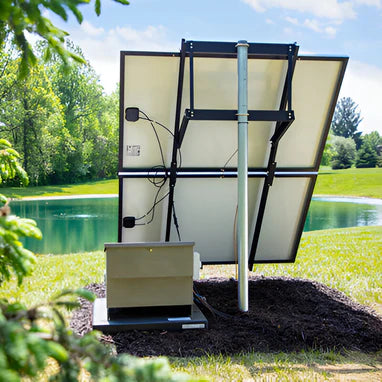
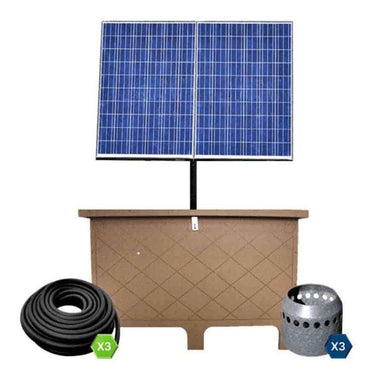
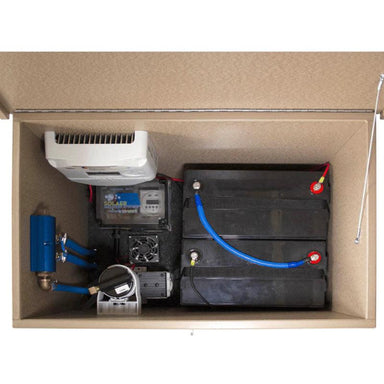
Airmax SolarSeries Aeration System with Battery Backup is the premier solar pond aerator designed for efficiency and reliability.
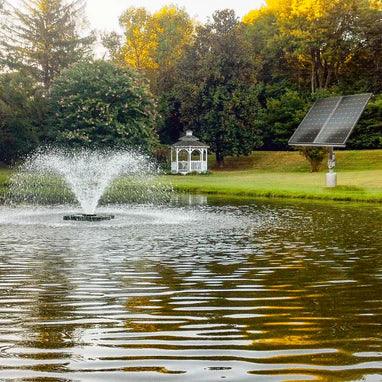
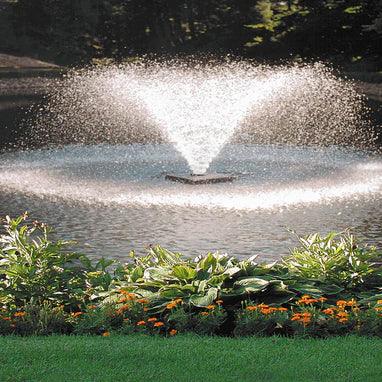
Solar Power Unleashed With The Scott Aerator DA-20 1/2 HP Solar Pond Fountain
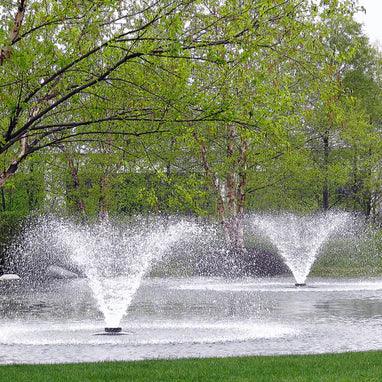
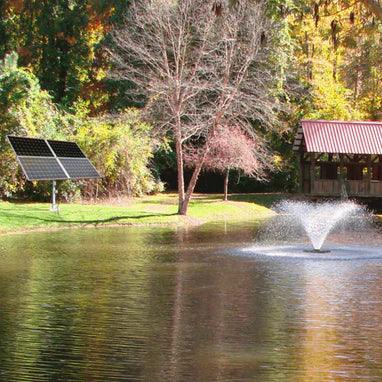
Solar Power Unleashed With The Scott Aerator DA-20 1/2 HP Solar Pond Fountain


Ideal for those who have ponds in isolated locations without access to electricity or who wish to use solar energy.
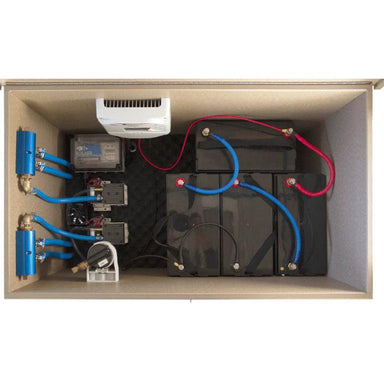
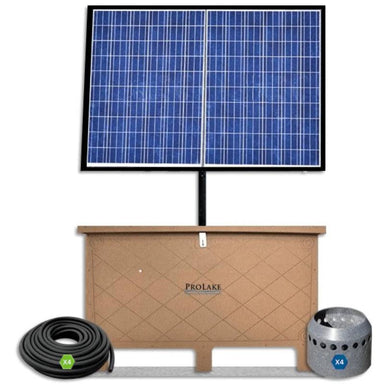
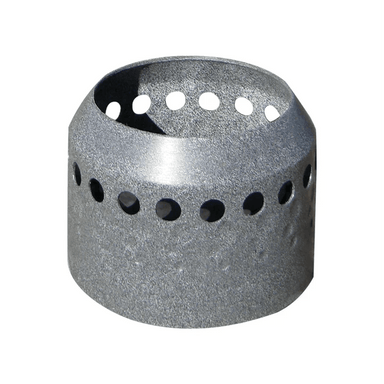
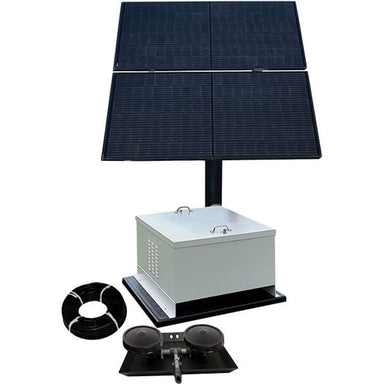
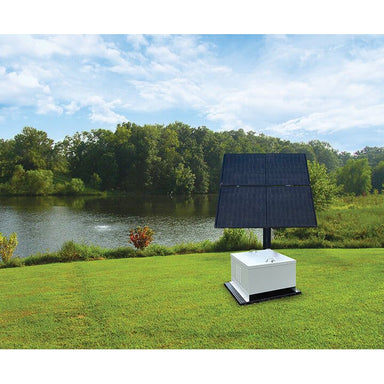
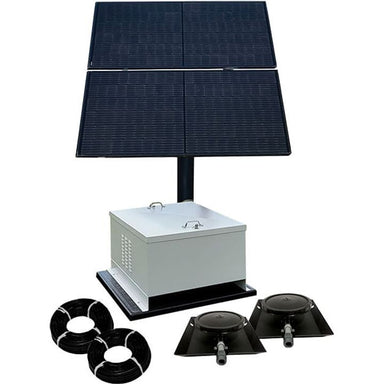
Solar pond aerators — effective aeration with no electricity required
A solar pond aerator does everything a traditional electric aerator does — circulates water, replenishes dissolved oxygen, reduces algae, and improves water quality — without a single foot of electrical wiring. For farm ponds, rural properties, and any pond located far from a power source, solar aeration is often the most practical long-term solution available.
We carry solar aerator systems from Airmax, EasyPro, and Outdoor Water Solutions — brands that build systems specifically for real pond conditions, not just ideal weather. Free shipping on all orders.
Two types of solar pond aerators — and why it matters
Not all solar aerators are built the same way, and the difference between the two main designs affects both performance and installation significantly.
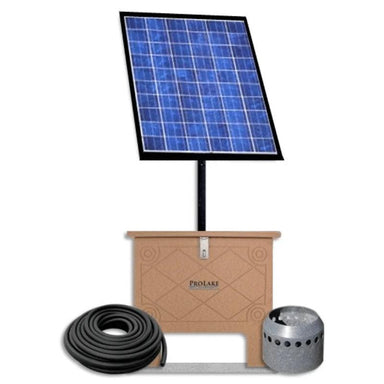
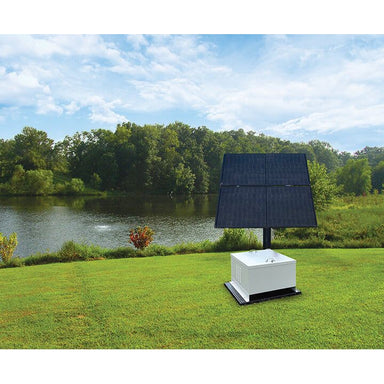
Panel-on-bank systems mount the solar panel on the shoreline while the aerator unit operates in the water. Because the panel isn't competing for float space, these systems can run larger, more powerful compressors. They also keep the panel at the optimal angle for sun exposure and make maintenance — cleaning the panel, checking connections — straightforward without getting in the water. Outdoor Water Solutions windmill and solar aerators use this approach. For ponds up to 1 acre or more, panel-on-bank systems are generally the stronger long-term choice.
Integrated float systems combine the solar panel and aerator into a single floating unit. Setup is simple — put it in the water and you're done. These work well for smaller ponds and situations where simplicity matters more than maximum output. Most compact solar fountain aerators use this design.
What about cloudy days?
This is the most common question solar aerator buyers ask, and it's the right one to ask before purchasing. The honest answer: solar aerators slow down or stop on overcast days and at night unless the system includes battery backup.
For ponds where continuous aeration is critical — fish ponds, koi ponds, heavily algae-affected water — a system with battery backup is worth the additional cost. Battery backup systems store energy during sunny hours and continue running through nights and cloudy periods. If you're managing a pond where fish health is the primary concern, prioritize battery backup over panel size.
For farm ponds and water quality improvement where some downtime is acceptable, a standard solar system without battery backup often performs well enough, especially in consistently sunny climates like the southern United States.
Sizing your solar pond aerator
The same sizing principles that apply to electric aerators apply to solar — match the system to your pond's surface area and depth. For the full methodology, see our guide: How Much Aeration Does My Pond Need?
- Up to 1/2 acre: compact solar aerator systems, integrated or panel-on-bank
- 1/2 to 1 acre: mid-range panel-on-bank systems with single or dual diffusers
- 1 to 2 acres: higher-output panel-on-bank systems, often with multiple diffusers
Depth matters too. Solar aerators work best when paired with bottom diffuser systems for ponds deeper than 6 feet — the rising bubbles from diffusers on the pond floor circulate the full water column in a way surface-only solar units can't match.
Shop by pond size: solar aerator for 1/2 acre pond · solar aerator for 1 acre pond
When solar is the right choice — and when it isn't
Solar aeration makes the most sense when:
- Your pond is more than 100 feet from a power source
- Running electricity to the pond requires trenching or an electrician
- You want to eliminate ongoing electricity costs
- The pond is on a remote or rural property
Solar aeration is not the best choice when:
- Continuous 24/7 aeration is non-negotiable and battery backup isn't in the budget
- Your pond is in a heavily shaded area with limited direct sunlight
- You need more than 1 to 1.5 HP of output — electric systems are more powerful at that range
For ponds with reliable power access, a traditional electric pond aerator will generally outperform a comparably priced solar system in raw output and consistency. Solar is the right trade-off when the cost or difficulty of running power outweighs the performance difference.
Frequently Asked Questions About Solar Pond Aerators
How does a solar pond aerator work? Solar pond aerators use photovoltaic panels to convert sunlight into electricity, which powers a compressor or pump that moves water or pushes air to diffusers on the pond floor. Panel-on-bank systems run the compressor from shore and push air through weighted tubing to bottom diffusers, creating rising bubbles that circulate the full water column. Integrated float systems run a smaller pump directly from the panel on the float, providing surface-level aeration. Both increase dissolved oxygen and improve water circulation — the difference is scale and depth coverage.
Should I buy a solar fountain or a solar aerator? If your pond is less than 4 feet deep and visual appeal is your primary goal, a solar pond fountain provides surface aeration and a decorative display in one system. If your goal is water quality, fish health, or treating a pond deeper than 6 feet, a dedicated solar aerator — particularly a bottom diffuser system — is more effective. Solar fountains move water at the surface; solar aerators with bottom diffusers circulate the entire water column. For ponds where both goals matter, many owners run both.
How many hours a day should a solar pond aerator run? For best results, run your solar aerator as many hours as sunlight allows — typically 8 to 12 hours on a sunny day. If your pond is dealing with active algae blooms, fish stress, or low oxygen levels, a system with battery backup that runs continuously through the night will resolve those issues faster. For general maintenance aeration in a healthy pond, daytime-only operation is usually sufficient. The key is consistency — intermittent aeration produces inconsistent results.
Can a solar aerator run on cloudy days? Yes, but at reduced output. Solar panels still generate power under cloud cover — typically 10 to 25% of their rated output depending on cloud density. On fully overcast days, performance drops significantly. If your climate includes extended cloudy periods or you're running the aerator in fall and winter when sun hours are reduced, factor that into your sizing — choose a system rated for slightly larger than your actual pond size to compensate for reduced output days.
How can I aerate my pond without electricity? Solar and windmill aerators are the two main options for off-grid pond aeration. Solar works best in open areas with good sun exposure. Windmill aerators work best in open areas with consistent wind and require no solar panels at all — they're completely mechanical with no electrical components. For very remote properties, windmill aeration can be a stronger long-term solution than solar in windy regions. For most pond owners, solar is the more reliable and widely applicable choice.
Do solar pond aerators work in winter? In mild climates, yes — solar aerators continue operating year-round as long as panels receive adequate sunlight. In colder climates where the pond freezes, most aerators should be removed and stored for winter. If your goal is winter aeration to maintain a breathing hole for fish, a pond de-icer is more effective than a solar aerator in freezing conditions, as de-icers are specifically designed for winter operation and draw warmer water from the bottom to prevent surface freezing.

Free Shipping to Lower 48 states

PRICE MATCH GUARANTEE

100% Made in the USA

FREE 30 DAY RETURNS
Free Shipping to Lower 48 states
PRICE MATCH GUARANTEE
100% Made in the USA
FREE 30 DAY RETURNS