

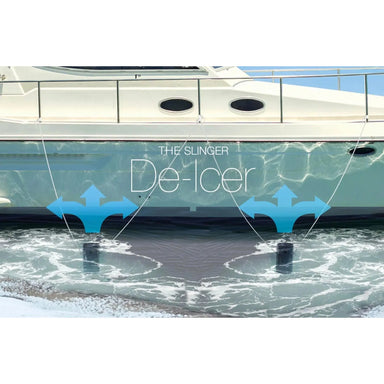
This De-Icer stands out for its efficiency, reliability, and exceptional resilience, effectively thwarting the formation of detrimental ice on a variety of surfaces.
Power House Ice Eater Gen 2 by Airmax
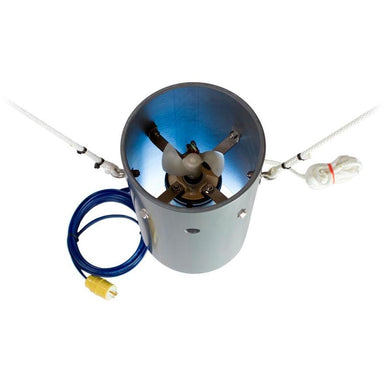
"Ice Eater" is the name of the Power House dock de-icer, and it's often used as a catch-all name for de-icers in general. The original is still made today. Airmax, which acquired the Power House brands (previously sold under the Bearon Aquatics name), released the second-generation Airmax Power House Ice Eater Gen 2 in October 2026. A compact glide-cage motor mount replaces the old shroud, so it's easier to hang, pull in the spring, and store.
- P500 (1/2 HP, 115V): opens roughly 40 ft of water. Single boats and mid-size docks.
- P750 (3/4 HP, 115V or 230V): opens roughly 60 ft. Larger docks and multi-slip areas.
- P1000 (1 HP, 115V or 230V): opens roughly 80 ft. Marinas and commercial use.
Every Ice Eater ships free and carries a 3-year manufacturer's warranty. Add the Ice Eater Thermostat so it only runs when it's cold enough to need it, or the Ice Eater Dock Mount to set depth and angle from your dock instead of using mooring ropes.
What is an ice eater and how does it work?
An ice eater is designed to keep an area of water open during freezing conditions by circulating warmer water from below the surface. This helps prevent complete ice coverage and allows for proper gas exchange in ponds during winter months.
They are commonly used in ponds, marinas, and waterfront properties where maintaining open water is important.
Here are some reasons customers love our ice eaters:
They Stop Ice from Forming
All our de-icers, including brands like Kasco Marine, Airmax Power House, and Scott Aerator, use strong underwater motors to pull warmer water from the bottom and push it to the surface. This keeps ice from forming in your pond.
In winter the water near the bottom of a pond stays a few degrees warmer than the surface, so bringing it up is enough to hold a small area open. This won't noticeably raise the temperature of your whole pond, so your fish can still go into torpor. Torpor is a state where fish hibernate in winter, requiring less food.
The Kasco Marine de-icer comes in 1/2 HP, 3/4 HP, and 1 HP sizes and can keep an area up to 75 feet clear. Our Scott Aerator de-icers are some of the best on the market and come in both floating and dock mounted.
For deeper water, like anything over 7 feet, the EasyPro Air De-Icing System uses air to move the water. It's great for larger docks and areas where traditional motors might not reach — this type of air-diffuser system is also known as a dock bubbler.
Keeps Hunting Access Open
When a pond freezes over, getting your boat to and from the blind can be a problem. A pond de-icer or ice eater for duck hunting keeps paths clear, so you don't get stuck or need to break through ice in the dark. Your gear stays safe, and your setup is ready to go.
Protects Your Property
When water freezes, it expands. That pressure can push on docks, pilings, and boat lifts, causing damage like cracking or bending. Our products keep the water moving, so it doesn't freeze in the first place.
Helps Water Quality
Besides stopping ice from forming, these machines also move the water, which can make a big difference for water health. Moving water means better oxygen levels and fewer stale or stagnant areas. This is especially good for fish and other wildlife.
Your Pond Pros offer EasyPro models that work for docks up to 100 feet long, making it a solid choice for bigger setups.
Simple Setup and Flexible Mounting
Many of our de-icers are easy to install. Our Kasco Marine models include ropes for hanging and can also be used with a floating dock available separately.
The Ice Eater hangs from the included mooring ropes, with six angle points on the mount rim to aim the flow. For a fixed setup, the Ice Eater Dock Mount lets you set depth, direction, and angle from your dock, and the Shallow Water Stand handles shallow spots with nothing to hang from (P750 and P1000).
Built to Last
Winter weather can be tough, but these machines can handle it. Scott Aerator de-icers come with tough, oil-free motors, strong polyurethane, and stainless steel parts. The company has been around for over 45 years and is still family-owned. Both Scott Aerator and EasyPro products are 100% made in the USA.
Why Shop With Your Pond Pros?
- Help When You Need It: Not sure which ice eater for duck hunting fits your spot best? Send us an email at support@yourpondpros.com. We'll help you find the right fit for your setup.
- Trusted Products with Warranties: We only feature products we believe in. Kasco Marine offers a 3-year warranty. Scott Aerator gives pond owners peace of mind with a 5-year warranty. We also match prices if you find the same item for less somewhere else.
- Hassle-Free Shipping and Returns: We ship for free to the lower 48 states and offer a 30-day return policy.
Not Sure If You Need a De-Icer, an Aerator, or Both?
This is one of the most common questions we get every fall. We put together a full breakdown covering what each one actually does, and when it makes sense to run both together: Pond De-Icer vs. Aerator: Which One Do You Need?
Looking Specifically for a Dock Bubbler?
If you came here searching for an air-diffuser de-icing setup, see our dedicated Dock Bubblers page, built around the EasyPro Air De-Icing System and sized by dock length (30 to 100 feet).
Frequently Asked Questions
Is "Ice Eater" a Brand?
Yes. Ice Eater is the Power House de-icer, now made by Airmax. Because it's been around so long, people often call any dock de-icer an "ice eater." This page carries the Ice Eater itself plus de-icers from Kasco Marine, Scott Aerator, Outdoor Water Solutions, and EasyPro, so you can compare them side by side.
Do Ice Eaters Work?
Yes, as long as there's warmer water below the surface to bring up. Even in a hard freeze, the water near the bottom usually stays a few degrees above freezing, and an ice eater pushes that water to the top to hold an area open. They work best with some depth under the unit, since shallow spots have less warm water to draw from. Wind, current, and extreme cold all affect how big an area stays open, which is why the open-water sizes we list are approximate.
How Long Does an Ice Eater Take to Work?
It starts moving water the moment it switches on, but how fast it clears existing ice depends on how thick the ice is, the water temperature at depth, and how the unit is aimed. Keeping ice from forming is much easier than melting it, so the best approach is to install your ice eater before the first hard freeze and let an Ice Eater Thermostat switch it on as temperatures drop. If the water has already frozen, you can still cut a hole, lower the unit in, and it will gradually melt the ice around it.
How Do Pond De-Icers Work?
Pond de-icers pull warmer water from deep below the surface and push it upward. This stops the top layer from freezing, which protects docks and boats. Only a small area stays open, so your whole pond doesn't warm up.
The EasyPro Air De-Icing System does this by sending air through tubes. It comes in different sizes, like the DKSW30 (for docks up to 30 feet) and the DKDW100 (for docks up to 100 feet).
The Scott Aerator Floating De-Icer is a self-contained unit that floats on the surface and stirs the water directly.
Can a Pond De-Icer Save My Fish?
Yes. In winter, ice can trap gases under the surface, which can harm or kill fish. A pond de-icer helps keep a hole open in the ice so gases can escape and oxygen can get in.
Can a Pond De-Icer Help with Ducks?
Yes. Ducks are drawn to open water in the cold. A frozen pond won't get any activity, but using a pond de-icer or ice eater for duck hunting helps create a landing zone. That open water is key for late-season hunting.
Can Ice Really Damage Gear?
Yes. As ice thickens, it can press hard on docks, blinds, and boat lifts. That pressure can lead to cracks, bending, or worse. Using a pond de-icer now keeps that from happening.
What's the Difference Between a De-Icer and an Aerator?
Both move water, but they're built for different reasons. A de-icer stops ice from forming by bringing warmer bottom water to the surface in one spot, while a fountain or aerator's main job is to add oxygen to the water. For the full comparison, including when it makes sense to run both, see our guide: Pond De-Icer vs. Aerator.
Do De-Icers Cost a Lot to Run?
Most de-icers use very little electricity. Some air-based systems cost just a few dollars a month to run. They're efficient and run all winter without using up your power bill.
Shop our full range of de-icers and ice eaters now and keep your waterfront safe, open, and damage-free all winter long. We also have pond pumps to keep your pond in good shape.


